Tesla FSD: Road Trips & Range
Long highway miles are where FSD earns its keep. Trip planning, charging stops, lane changes, exits, construction, and one very good use of the frunk, from eight road trips out of Kansas City.
Is Tesla FSD good for road trips?
Yes, and this is where I think it’s worth the money. Long highway miles are exactly what it’s best at, and after a few hundred of them you notice you’re not as beat up as you’d normally be. I ran Kansas City to the Gulf and back this July, a couple weeks and a lot of interstate, and the car did nearly all of the driving. Put that together with the trip planner routing you through the chargers and a long haul turns into something pretty relaxed.
Does FSD plan charging stops on a road trip?
That part is actually the navigation and the trip planner, not FSD, but they work together so well you stop noticing the difference. You put your destination in and it lays out the Superchargers along the way with the timing worked out, and it’ll tell you what percentage you’ll roll into each one with. Leaving for Alabama this summer it came back with 505.7 miles, right at nine hours, and three stops already picked. I didn’t look up a single charger the whole way down. I just drove to the next pin.
Does using FSD reduce my Tesla's range?
Not in any way you’d notice. The computer draws a little power but it’s nothing next to the cost of actually moving the car down the road. If anything, the smooth anticipatory way it drives can be a touch more efficient than a person going on and off the accelerator. Your range is going to be decided by how fast you’re going, what the terrain’s doing, the weather, and how hard you’re running the climate. Not by this.
Can FSD change lanes and pass slower cars on the highway?
Yes. It’ll move out around slower traffic and come back over, and depending on your settings it either does it on its own or waits for you to confirm. There are assertiveness profiles for how hard it pushes, and I’ve experimented with all of them, Mad Max included. Here’s my read on the last two builds: the profiles got stronger across the board. Mad Max got a little more mad and Hurry is in more of a hurry than it used to be, so plain Standard now does everything I need. And Mad Max is definitely too much with my wife in that passenger seat.
Does FSD take highway exits and interchanges automatically?
It does, as long as you’ve given it a destination. It’ll get itself over in time and take the exit. The big multi-lane interchanges are the ones I still watch closely, because that’s a lot of decisions in a short distance, though they’ve been getting better build over build. Set your route ahead of time and it handles all of this a lot more gracefully than if it’s improvising.
How does FSD handle construction zones?
This is my biggest gripe, so I’ll just say it. It’ll get through most work zones, following the shifted lanes and respecting the cones, but it does not want to slow down the way I want it to. Kansas City is one long construction season, so I deal with this constantly. Temporary paint, a flagger, a sudden merge, that’s a lot to ask of any system like this. I treat a construction zone as a take-the-wheel-soon situation and I’d tell you to do the same.
Can FSD drive me the entire trip without me touching anything?
It can do most of the driving on most trips, and on a good highway run it’ll go a long way without needing you. I’ve had it go 250 miles without a takeover, twice, both times on interstate in Alabama. But no, you can’t check out. You’ll still take it for construction, or something strange, or just because you’d rather do it yourself. Think of it as the car doing the work while you stay the pilot in command.
Can the frunk actually work as a cooler on a road trip?
Yes, with one big asterisk I learned the hot way. The frunk is a watertight tub with a drain plug, so ice can go straight in and the meltwater lets itself out, and for an afternoon tailgate that’s honestly all you need. What that tub is not is insulated. It’s a plastic box in the nose of a car that’s been sitting on July asphalt, so loose ice in there melts fast, way faster than it would in a real cooler. My fix cost thirty dollars: three soft-sided cooler bags from Walmart, about ten bucks each, filled with ice and zipped shut, set side by side in the frunk. They squish enough to fit the space, they kept everything cold across two hot states, and after the trip they folded flat on a garage shelf. Tesla sells a fitted frunk cooler for a couple hundred dollars, and I’m sure it’s nice. The bags did the job. The full saga is in my driver’s-seat log.
Notes that back these answers
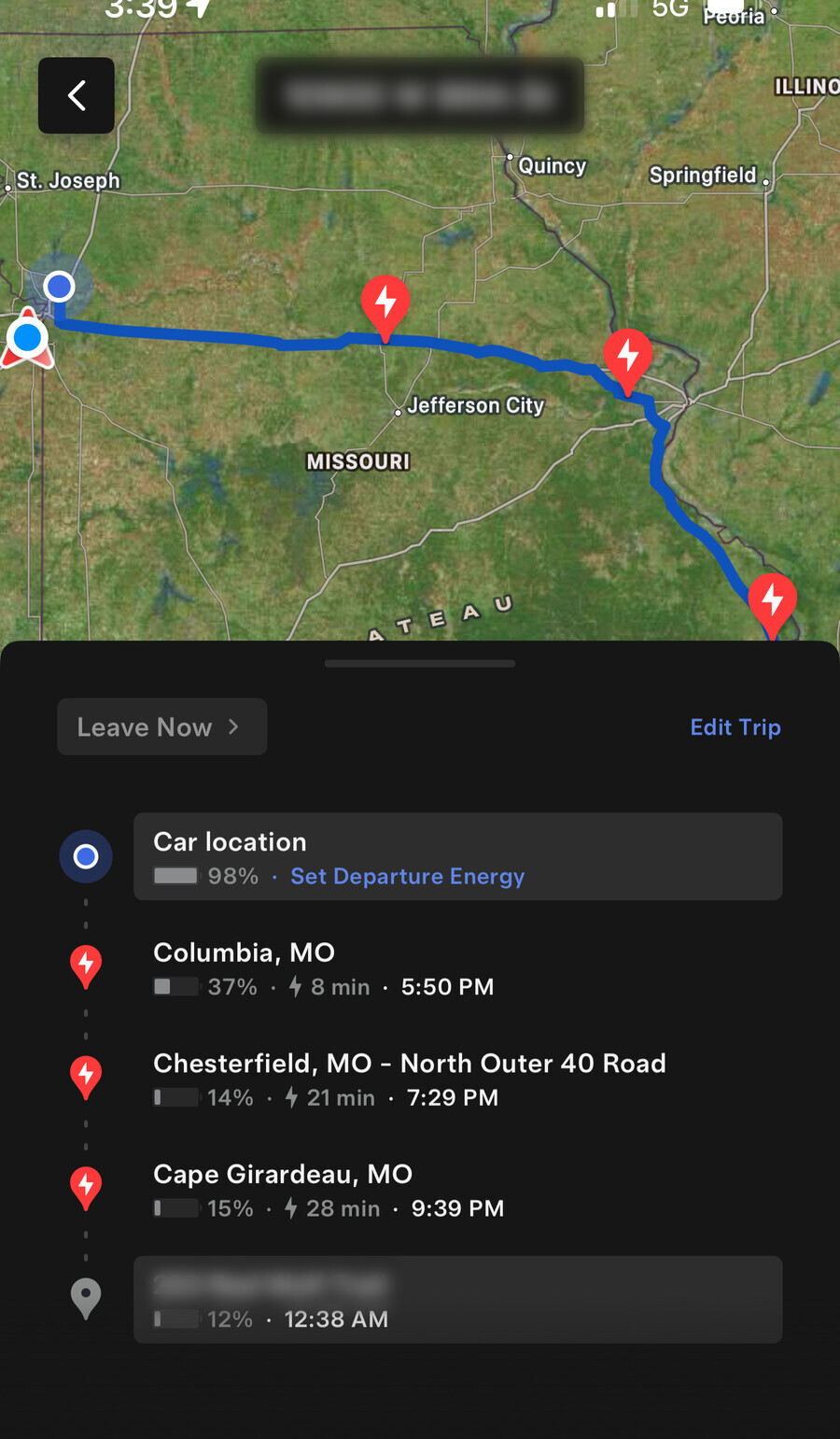
What a 500-mile day looks like before you pull out
Before I left for Alabama I put the destination in and let the car do the math. It came back with 505.7 miles, a little under nine hours, and three Supercharger…
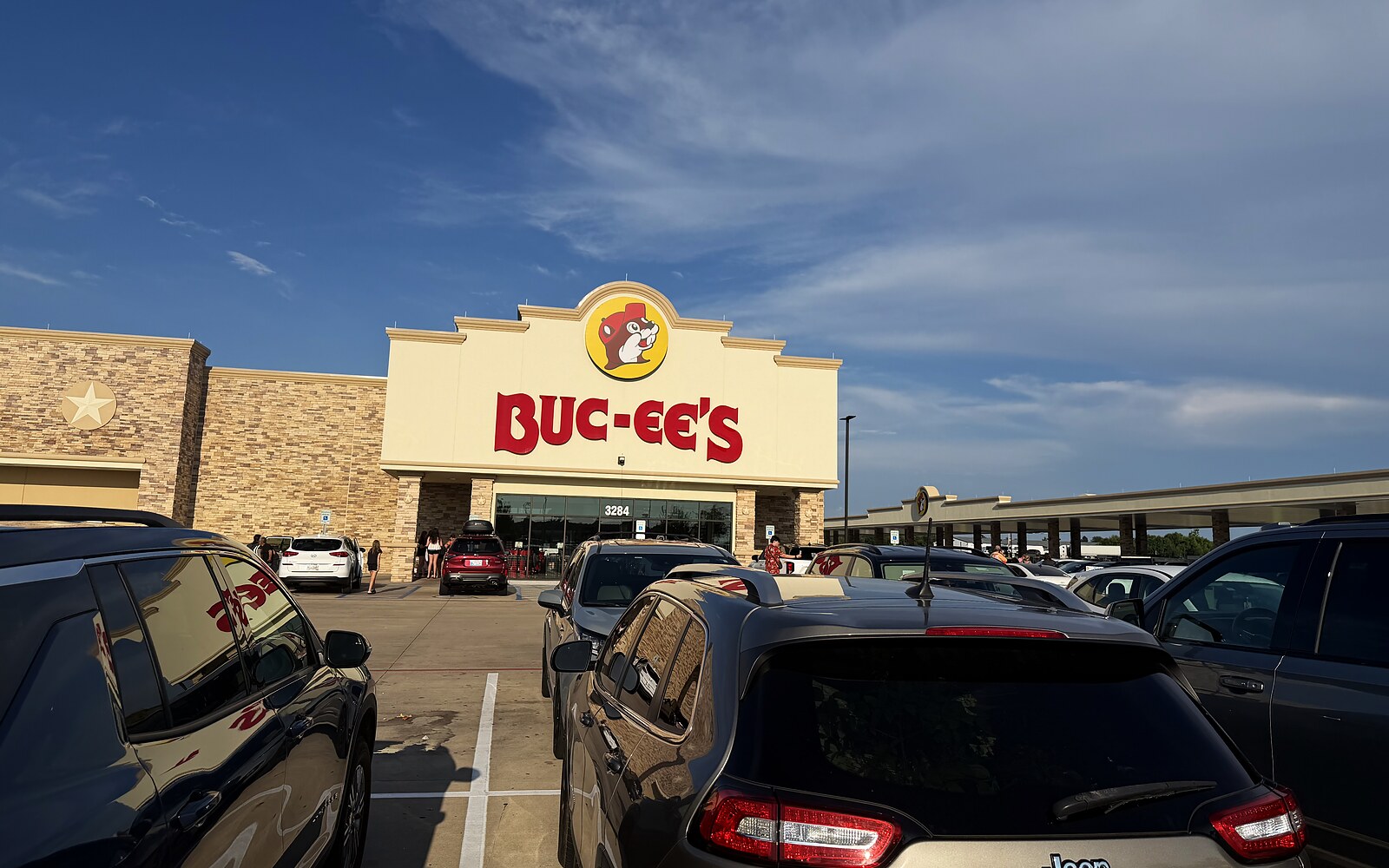
Charging stops are just rest stops now
First stop out of Kansas City was the Buc-ee’s outside Springfield. Here’s the thing about charging on a road trip that I don’t think gets said enough: you were…
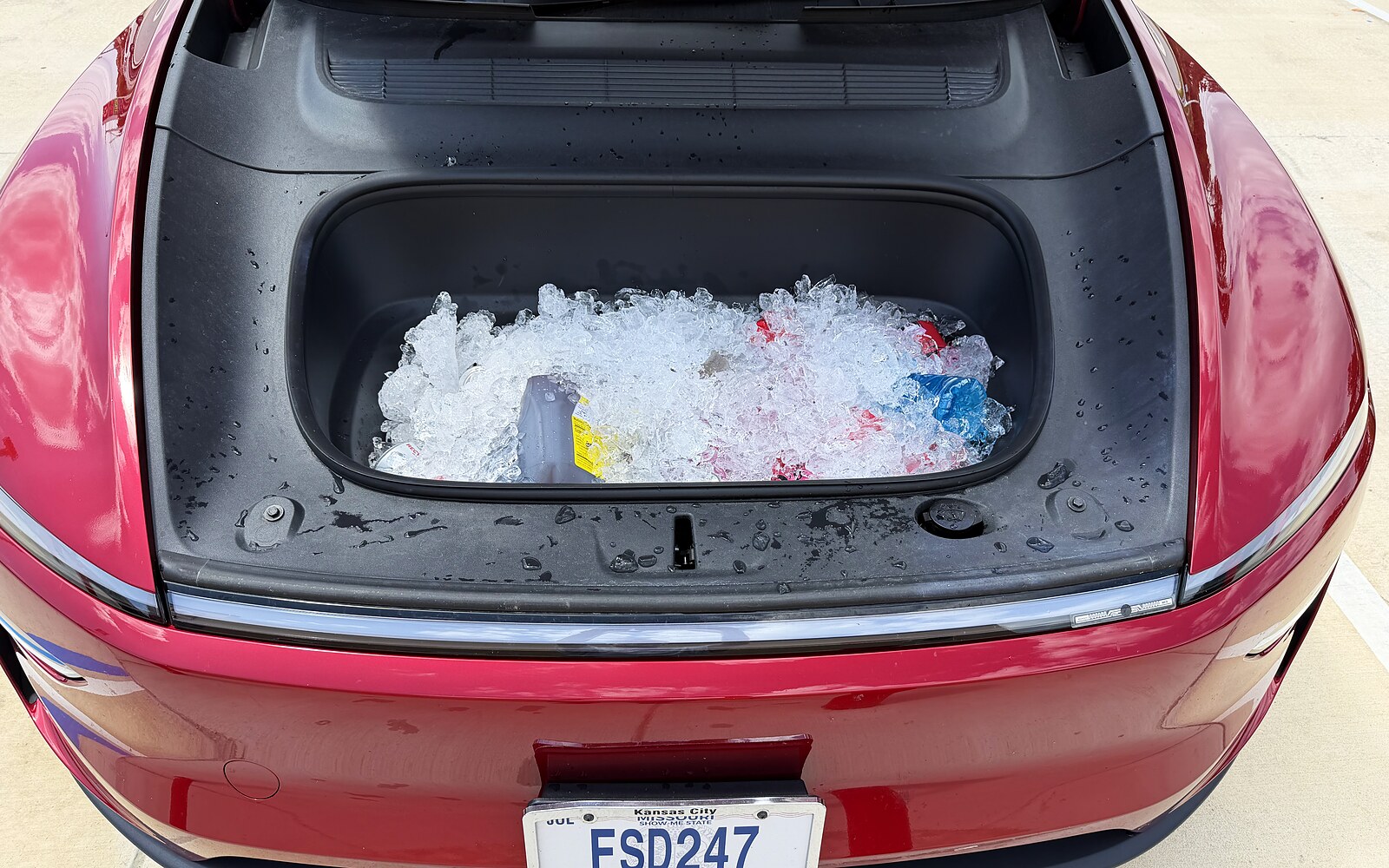
The frunk is the most underrated thing on this car
Nobody buys one of these for the trunk under the hood, and then you take one long trip and it turns into the thing you end up telling people about. I filled it with…
Thinking about a Tesla? Get 3 months of FSD free.
Use my Tesla referral → Referral code: roger804133Not buying anything today? The same link books a demo drive, so you can go drive FSD yourself first.
Schedule a demo drive →Tesla gives you 3 free months of FSD and credits me, for an order or a demo drive. It costs you nothing either way. Full terms →