Tesla FSD: Weather & Conditions
It is a vision system, so it is working with the same thing you are working with. If you cannot see, it cannot see. Rain, snow, fog, glare, night, and heavy traffic, from a car that lives through Kansas City weather.
Does Tesla FSD work in the rain?
Yes. Rain is fine, and it’s not like the thing panics the second it gets wet. Heavy downpour is a different animal, though. Water on the lenses, spray coming off the truck in front of you, visibility dropping. It’ll slow up, and sometimes it’ll ask you to take it. Which honestly seems about right to me. It’s a vision system, so it’s working with the same thing you’re working with. If you can’t see, it can’t see. I drove through some real rain on I-65 in Alabama back in July and it did fine, but I was paying closer attention than usual.
Can FSD drive in snow?
Light snow, yes. Heavy snow is where I’d plan on doing more of the driving myself. The problem isn’t the cold, it’s that snow covers up the lane lines, and the lane lines are one of the main things it’s looking at. Add slush getting thrown up onto the cameras and you’ve taken away most of what it needs. It gets more cautious, or it asks you to take it. In a real Kansas City winter storm, I just drive.
What happens when a camera is blocked or dirty?
It tells you, and depending on how bad it is, it’ll limit itself or shut FSD off until it can see again. Which makes sense. It’s a vision system, so a camera covered in mud or ice or road spray is the same as you driving with your eyes closed on one side. Keeping the glass clean is the cheapest thing you can do to keep it working well, and I’d put it ahead of just about any other advice on this page.
Does FSD work at night?
Yes, and I’d say night highway driving is one of the places it earns its keep. It handles low light, headlights, lit signs and signals without much drama. Dark rural roads with no lighting and faint paint are harder, and that’s where I sit up straighter. But a long stretch of interstate at night with the car doing the work is genuinely less tiring than doing it yourself.
Can FSD handle fog?
Light fog, yes. Thick fog is going to degrade it, same as it degrades you. It’s cameras, so it can’t see through what the cameras can’t see through, and there’s no radar underneath to fall back on. In heavy fog I’d slow down and stay ready. That’s what I’d do driving myself anyway.
Does sun glare affect FSD?
It can. A low sun straight into the lenses will wash out a camera the same way it blinds you coming over a hill at the wrong hour. Mostly it copes fine, but in bad glare it gets more careful or asks for help. Clean glass matters more than people think here. A dirty windshield with the sun behind it is a mess for both of you.
Is FSD reliable in heavy traffic and stop-and-go?
This is one of the best things it does, and it doesn’t get talked about enough. Crawling traffic is miserable to drive and the car is completely unbothered by it. It manages the gaps, creeps forward smoothly, holds its distance, none of the lurching you get from older cruise systems. You’re still supervising, but you’re not working. If you’ve got a bad commute, this alone might be the argument.
Notes that back these answers
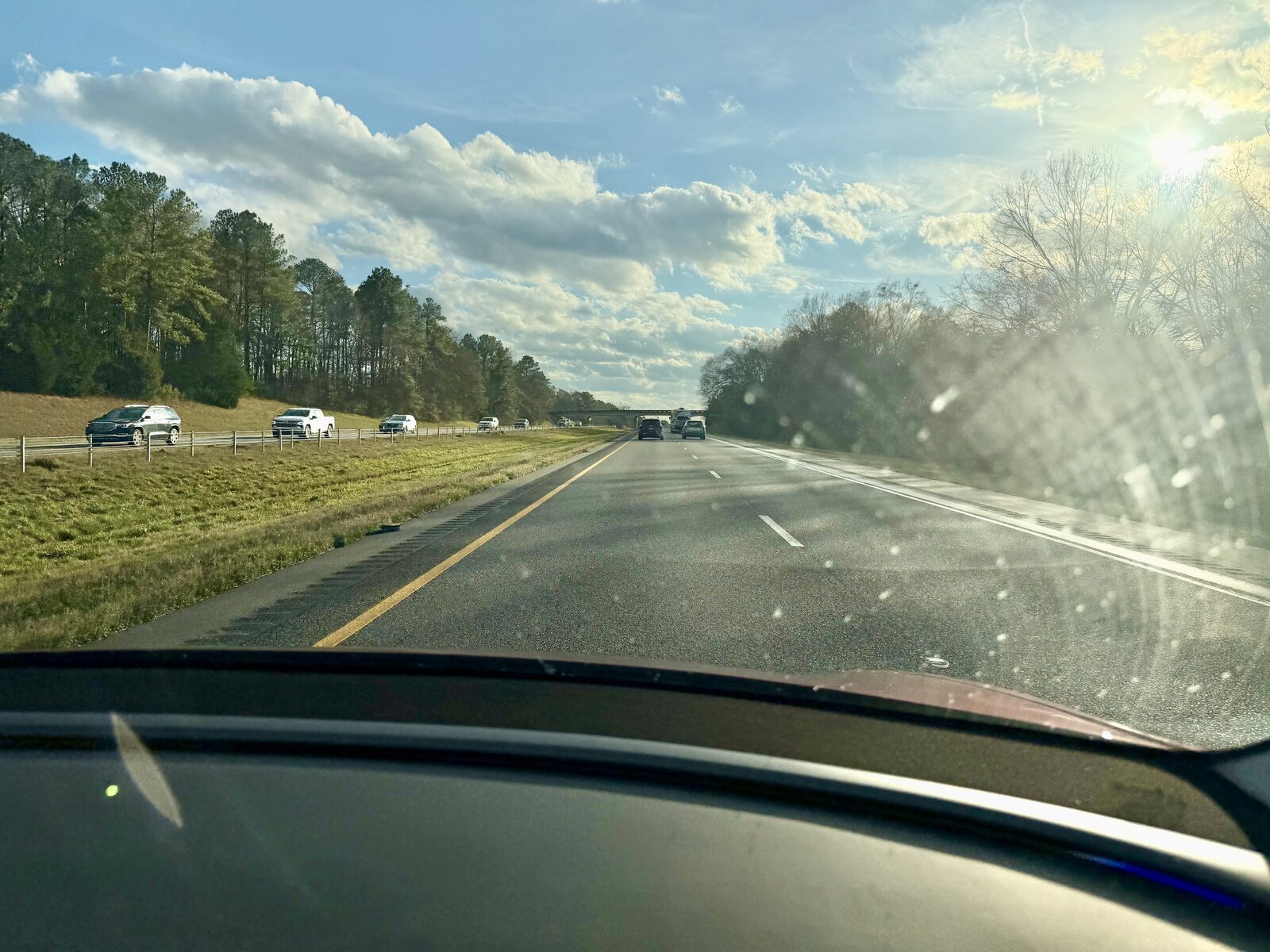
The cameras see through bugs better than I do
This windshield is what a southern interstate does to a car in the summer. Every one of those specks used to be airborne, and the front cameras live behind that…
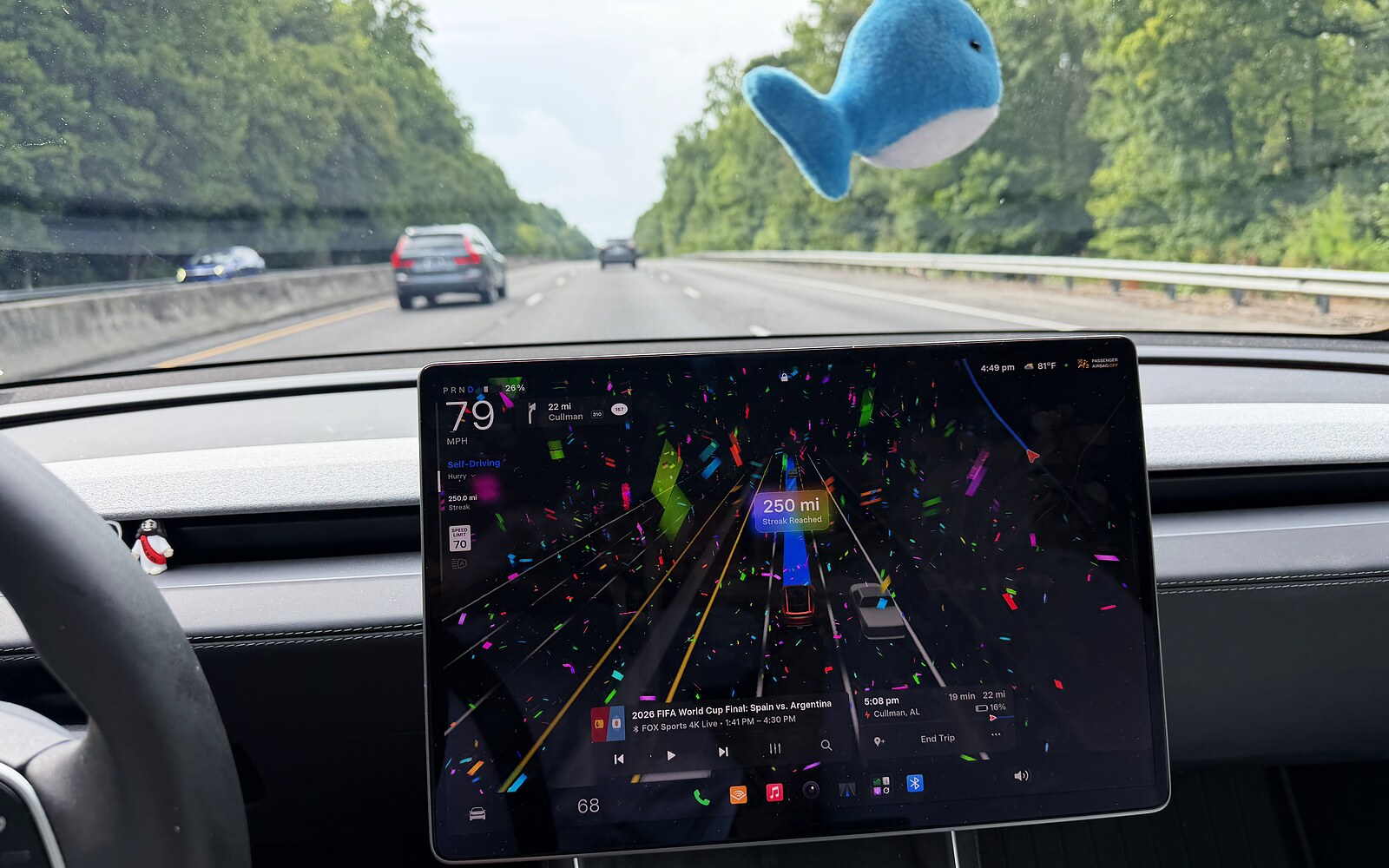
I said I’d never have a streak. The car got two.
A while back I wrote that I’d probably never have a streak, because I take over too often for one to ever run. Turns out I was wrong twice in two weeks. Heading…
Stop signs, summer trees, and what FSD sees before I do
I’ve never had FSD run a stop sign on me. What I have seen, and it’s worse this time of year, is the car not spotting a sign until it’s right up on it, because the…
Thinking about a Tesla? Get 3 months of FSD free.
Use my Tesla referral → Referral code: roger804133Not buying anything today? The same link books a demo drive, so you can go drive FSD yourself first.
Schedule a demo drive →Tesla gives you 3 free months of FSD and credits me, for an order or a demo drive. It costs you nothing either way. Full terms →